

This is an excerpt from a larger project summarizing the evidence on sauna use and cardiovascular disease. This excerpt centers on the Kuopio Ischemic Heart Disease Risk Factor Study.
Cardiovascular disease is the number one cause of death worldwide. In the United States, it causes roughly one in four deaths. Despite the advances in pharmaceutical prevention, earlier detection, and interventional therapies, medicine has failed to keep up with the growing incidence.
the Kuopio Ischemic Heart Disease Risk Factor Study
The Kuopio Ischemic Heart Disease Risk Factor Study is a large study out of Finland that has been following thousands of Finnish citizens for health outcomes for over 40 years, and is still ongoing. It is a prospective cohort study, initially started in 1984 with a cohort of 2600 middle aged men, later adding a cohort that included women. [1]
At baseline, participants underwent extensive testing and interviews to characterize dozens of potential risk factors. Assessments included standard and experimental blood tests, physical measurements, fitness testing, detailed dietary records reviewed by dietitians, and questions about health routines and habits, including sauna use.
Researchers periodically follow participants and use national registries to identify new diagnoses, hospitalizations, deaths, and causes of death. The resulting data have supported more than 500 peer-reviewed papers.[2]
The Finish Sauna
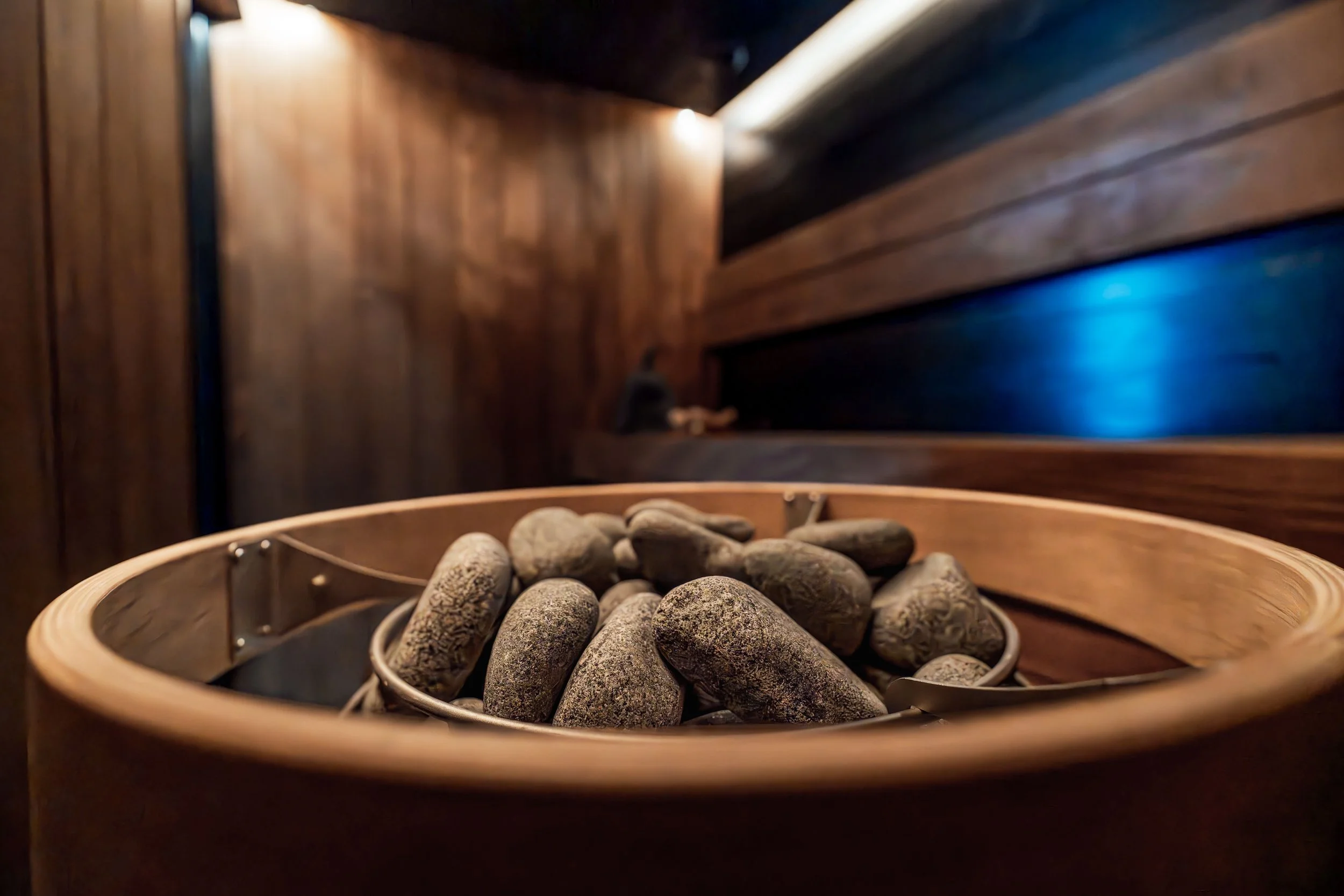
The Finish Sauna
In the country of Finland, where there are roughly 5.5 million people, there are estimated to be about 3.3 million saunas[3].
In the country of Finland, where there are roughly 5.5 million people, there are estimated to be about 3.3 million saunas[3]. Common cultural sayings compare saunas to church, and it was once traditional to give birth in a sauna, as it was the cleanest place in the home. It is a practice that nearly every Finnish citizen partakes in. Researchers grouped subjects into three categories by frequency of sauna use:
Frequent sauna use: four or more sessions per week
Moderate sauna use: two to three sessions per week
Infrequent use: one session per week or less
Results
The first paper on sauna bathing to come from this study data was published in 2015, using data on 2315 men, with follow-up after an average of 20.7 years. After other cardiac risk factors were adjusted for, including blood lipids and fasting glucose, blood pressure, BMI, smoking, physical activity, the hazard ratio for subjects in the moderate sauna use group, 2-3 times per week, was 0.78 for sudden cardiac death (SCD) compared to the infrequent sauna users. The most frequent sauna users had a hazard ratio of 0.37.[1]
In frequent sauna users, mortality was reduced by 38%. These findings were replicated in subsequent analyses that included both men and women. When sauna exposure was measured by time rather than frequency, individuals spending more than 45 minutes per week in the sauna experienced a 43% lower risk of cardiovascular mortality compared with those spending less than 15 minutes weekly. [4]
Interaction With Cardiorespiratory Fitness
Cardiorespiratory fitness was measured by maximal oxygen uptake (VO₂ max), and was independently associated with cardiovascular outcomes in the KIHD cohort. Participants with higher fitness levels had a 52% lower incidence of sudden cardiac death over a 26-year follow-up period. When sauna use and fitness were evaluated together, a synergistic effect emerged. Participants with both high cardiorespiratory fitness and frequent sauna use experienced a 69% lower incidence of sudden cardiac death compared with those with low fitness and infrequent sauna use.[5]
Mechanisms: Endothelial function and blood Pressure
Chuwa Tei is a Japanese cardiologist who has been studying infrared saunas on cardiovascular disease since the 1980s, with positive results. He calls the protocol they use “Waon therapy,.“ It involves a far infrared sauna set at 60ºC (140ºF) for 15 minutes, followed by lying under blankets for another 30 minutes. Studies have shown significant improvements in symptoms and markers of congested heart failure (CHF) and peripheral artery disease (PAD) in patients, after as little as 3 weeks of daily Waon therapy[6].
One mechanism thought to be involved is improved endothelial function. The endothelium is not just a layer of cells lining the blood vessels, it is active in the vessels response to changes in blood flow, releasing NO to cause the vessel wall to relax with increased blood flow. If the endothelium does not respond appropriately, the increased flow against stiff vessel walls causes stress to the vascular walls, damaging the cells and causing further dysfunction. The damage then leads to inflammation and plaque build up, and eventually to reduced blood flow.
The response of the vessel to relax with increased blood flow is called flow mediated dilation (FMD) and it is now seen as one of the most important early indicators of heart disease. Just a 2% improvement in FMD translates to approximately 15% lower risk of cardiovascular disease and events.[7]
Studies on men with cardiovascular risk factors and impaired flow mediated dilation, they saw an increase of 1.8%, from 4% to 5.8%, in FMD after two weeks of daily far infrared sauna therapy Studies have also shown reduction in resting blood pressure with regular sauna use.[8]
Discussion
The observed associations between sauna frequency and cardiovascular outcomes were large. The principal limitation of the study is the observational design: the correlation cannot establish whether sauna exposure itself caused the lower risk. Residual confounding, differences in health status or behavior, and the predominantly Finnish study population may limit causal inference and generalizability.
However, given there are other bodies of research on heat therapy and cardiovascular risk reduction, and there is a proposed, plausible, and studied mechanism, it is not unreasonable to propose the possibility that the risk reduction is due to the heat exposure directly. Further studies would be needed to better establish causation, and further delineate mechanisms, but this could be a promising modality. Given this is a non-pharmacologic, and already widely utilized practice throughout the world and for millennia, the risks of encouraging the practice are minimal, and if these numbers are reproducible, could have huge impacts on public health.
References
1. Laukkanen T, Khan H, Zaccardi F, Laukkanen JA. Association between sauna bathing and fatal cardiovascular and all-cause mortality events. JAMA Intern Med. 2015;175(4):542-548. doi:10.1001/jamainternmed.2014.8187
2. Frontpage. The Kuopio Ischaemic Heart Disease Risk Factor Study (KIHD Study). Accessed September 7, 2026. https://sites.uef.fi/kihd-study/
3. Sauna culture in Finland - UNESCO Intangible Cultural Heritage. Accessed September 7, 2026. https://ich.unesco.org/en/RL/sauna-culture-in-finland-01596
4. Laukkanen T, Kunutsor SK, Khan H, Willeit P, Zaccardi F, Laukkanen JA. Sauna bathing is associated with reduced cardiovascular mortality and improves risk prediction in men and women: a prospective cohort study. BMC Med. 2018;16(1):219. doi:10.1186/s12916-018-1198-0
5. Laukkanen JA, Laukkanen T, Khan H, Babar M, Kunutsor SK. Combined Effect of Sauna Bathing and Cardiorespiratory Fitness on the Risk of Sudden Cardiac Deaths in Caucasian Men: A Long-term Prospective Cohort Study. Prog Cardiovasc Dis. 2018;60(6):635-641. doi:10.1016/j.pcad.2018.03.005
6. Sobajima M, Nozawa T, Fukui Y, Ihori H, Ohori T, Fujii N, Inoue H. Waon therapy improves quality of life as well as cardiac function and exercise capacity in patients with chronic heart failure. Int Heart J. 2015;56(2):203-8. doi: 10.1536/ihj.14-266. Epub 2015 Feb 27. PMID: 25740582.
7. Yeboah J, Folsom AR, Burke GL, et al. Predictive value of brachial flow-mediated dilation for incident cardiovascular events in a population-based study: the multi-ethnic study of atherosclerosis. Circulation. 2009;120(6):502-509. doi:10.1161/CIRCULATIONAHA.109.864801
8. Imamura M, Biro S, Kihara T, et al. Repeated thermal therapy improves impaired vascular endothelial function in patients with coronary risk factors. J Am Coll Cardiol. 2001;38(4):1083-1088. doi:10.1016/s0735-1097(01)01467-x

Good things come to those who sweat.